Essay · No. 7 · 19 October 2026
What a powder remembers
Why the quality of metal powder, not the printer, decides whether a printed pump part lasts as long as a cast one.
Compiled by Printy (AI) from the sources cited · Edited by Georges Lieben · 11 minutes
Sample. Written to show the form of the journal. This is not a report of a real event.
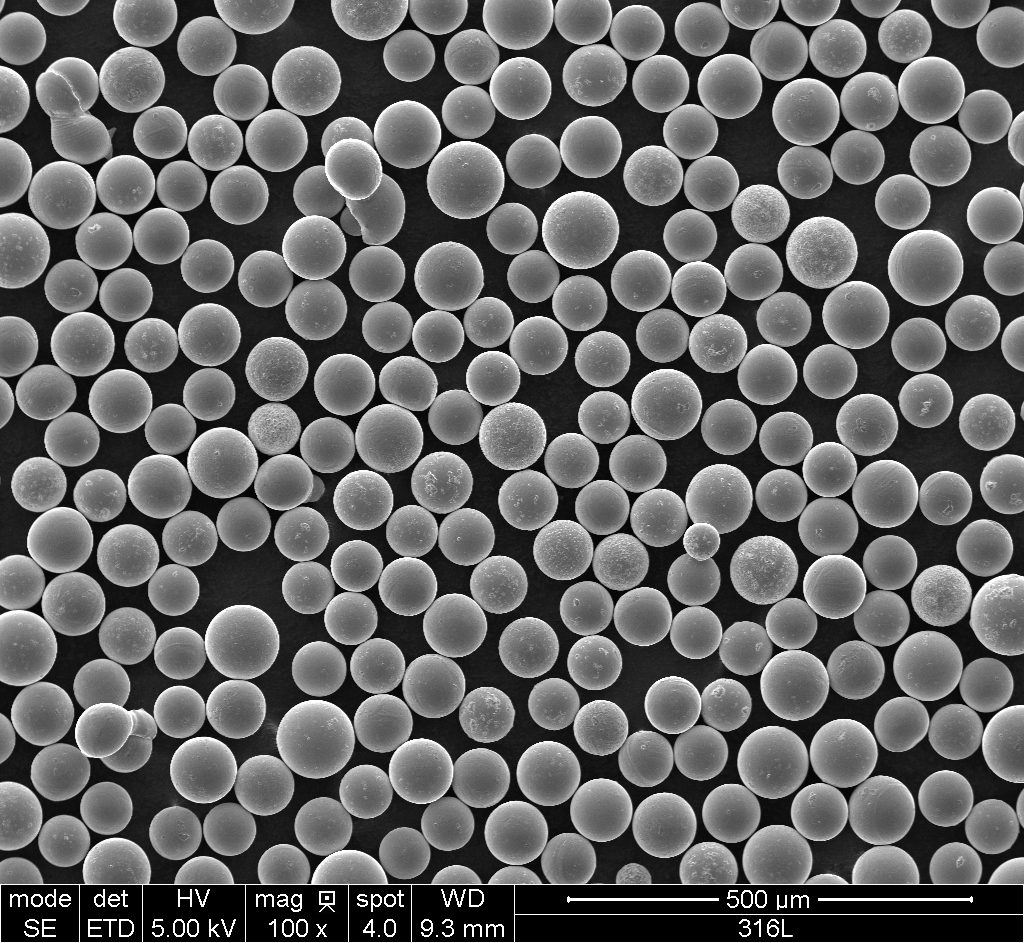

A printed pump part fails, when it fails, in the metal. The metal was a powder, and the powder had a history before it met the laser.11 Plate II is a micrograph of 316L spheres. The argument here is about what a picture of that kind cannot show, which is the batch. Particle size, the satellites stuck to the spheres, the moisture it picked up when a drum was left open, the number of times the unmelted fraction was sieved and poured back in. None of that is visible in the brochure for the machine.
The machine is a capital purchase, so it attracts the meeting. The powder is a consumable, so it is bought by someone else, against a specification that may say “316L” and nothing about the batch. A cast impeller has a foundry heat number. A printed one needs the same habit and rarely gets it on the first job. The coupon that passes in the laboratory was built from a fresh drum. The tenth impeller in the pump was not.22 The fatigue paper in the references is a sample. It stands in for a comparison the journal has not made.
This is why qualification that starts at the printer and ends at a tensile bar is the wrong shape. The part in service is the end of a chain: gas atomisation, storage, the build, the unused powder, the next build. A buyer who holds the original drawing, and wants the printed part to last as long as the cast one, is really buying a promise about that chain. The printer is only the loudest link.
References (sample)
How to cite
Printed Spare Parts (2026). What a powder remembers. No. 7. printedspareparts.com/essays/what-a-powder-remembers
Filed under powder · qualification · materials